Crime is up. Here's what it actually means for your business.
If you've been following the news lately, you'd be forgiven for thinking things are getting significantly worse out there. Crime is up — that much is true. But the headline figure doesn't tell the whole story, and reacting to a statewide average without understanding your own situation isn't good security thinking. It's just expensive anxiety.
Here's what the numbers actually say, and more importantly, what you should do with them.
The statewide picture
Victoria recorded 473,262 criminal incidents in the year to December 2025 — a 4% increase on the previous year. That's real, but it's not dramatic. For most businesses, a 4% shift in the general crime rate is unlikely to materially change their risk exposure on its own.
The southeast is a different story
If your business sits in Melbourne's southeast — Greater Dandenong, Casey, or the surrounding industrial corridor — the numbers are considerably sharper. Recorded offences in Greater Dandenong rose 16% in the year to June 2025, with Dandenong itself up 24% and Dandenong North up 27%. In Casey, the figure was even higher — a 20.5% increase, with motor vehicle theft up 54% and theft from vehicles up 29%.
The crime profile in this corridor is also worth noting. The most commonly stolen items in the Dandenong South industrial precinct are tools, power tools, car accessories, and electrical equipment. This isn't residential crime bleeding into commercial areas. It's targeted, practical, and largely property-based — and it maps directly to the kinds of assets many businesses in this region hold.
Before you do anything, pause
The instinct when you see numbers like these is to act. But the right response to rising crime rates isn't necessarily to spend more on security — it's to understand your actual exposure first.
That's where a simple risk assessment comes in. Not a formal document with a consultant attached. Just four honest questions:
What are the realistic risks my business faces? Think about your physical assets, your access points, your location, and what you actually have on site worth targeting.
How likely is each of those risks to occur? Be honest here. A business with a well-lit, fenced yard and functioning CCTV is a harder target than one without. Likelihood isn't just about the area — it's about how attractive your site is relative to others nearby.
Has that likelihood changed? This is where the local data above becomes relevant. If you operate a vehicle fleet or store high-value tools and equipment in the southeast corridor, the answer may well be yes.
What would the consequence actually be? Consider the financial cost of what could be stolen or damaged, the operational disruption of a break-in, and the time it would take to recover. A theft that costs $500 and takes a day to sort out sits in a very different place to one that takes out your fleet for a fortnight.
Plot each risk against the matrix below. Where it lands should guide your response — not the news cycle.
Some practical steps worth taking
Whatever your risk rating, the basics are always worth checking. These aren't complex interventions — they're the fundamentals that make a site look cared for, monitored, and not worth the effort.
Doors, gates, and locks. Check that every external door, gate, and access point is in working order and actually being secured at the end of each day. Forced entry through a faulty gate costs a business far more than fixing it would have.
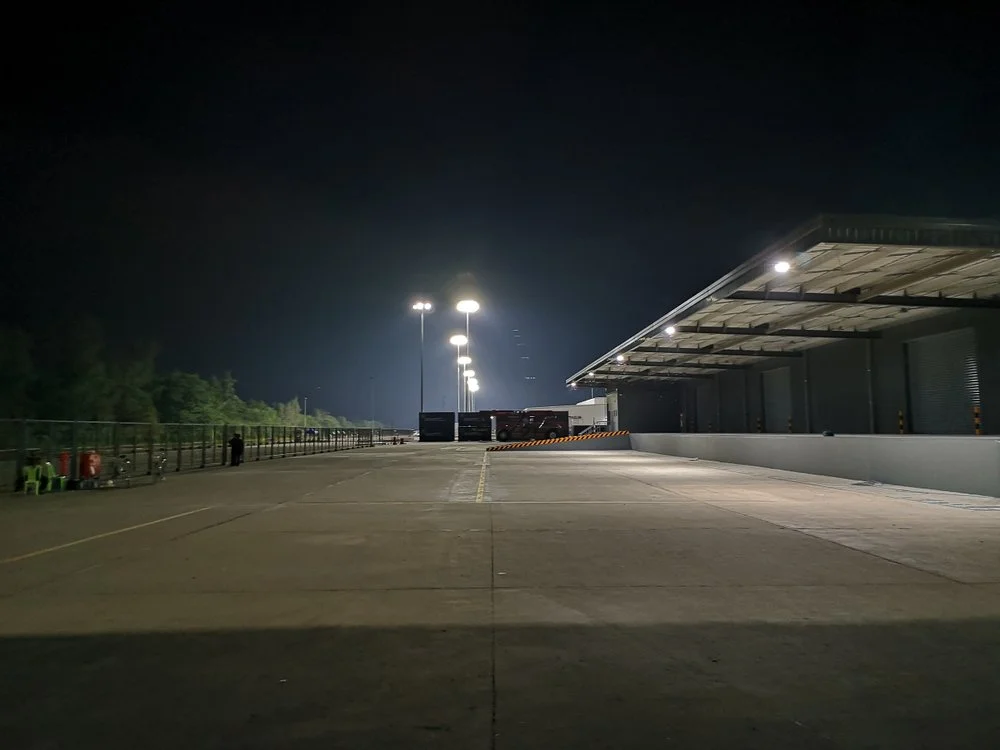
External lighting. Walk your site at night. Are the lights you think are working actually working? Good lighting is one of the most effective and affordable deterrents available.
General presentation and maintenance. A well-maintained site signals that someone is paying attention. Graffiti, broken fencing, overgrown areas, and general neglect all communicate the opposite — that a site may be unmonitored or easy to access unnoticed. Clean it up, fix what's broken, and keep it that way.
Environmental design. Think about how your site is laid out. Clear sightlines, defined perimeters, and reduced hiding spots all reduce opportunity. This doesn't require a redesign — sometimes it's as simple as moving a container or trimming a hedge.
Alarms and monitoring. Make sure your alarm system is current, tested, and actively monitored. If it goes off and nobody responds, it isn't doing its job.
Video surveillance. Cameras deter, and footage matters when something does happen. Check that your cameras cover the access points and asset areas that matter most, and that the footage is actually being stored and retrievable.
Know your neighbours. Businesses in industrial and commercial precincts that communicate with each other are harder to operate around undetected. It costs nothing to build that relationship.
The bottom line
Crime in Melbourne's southeast is up, and for some businesses — particularly those with vehicle fleets, tradeable equipment, or high-value assets on site — that warrants a genuine look at their current security posture. For others, the right response may simply be confirming that the basics are in place and working.
Either way, the answer starts with understanding your own situation — not with reacting to a headline.
If you'd like a fresh set of eyes on your site, we're always happy to take a look.